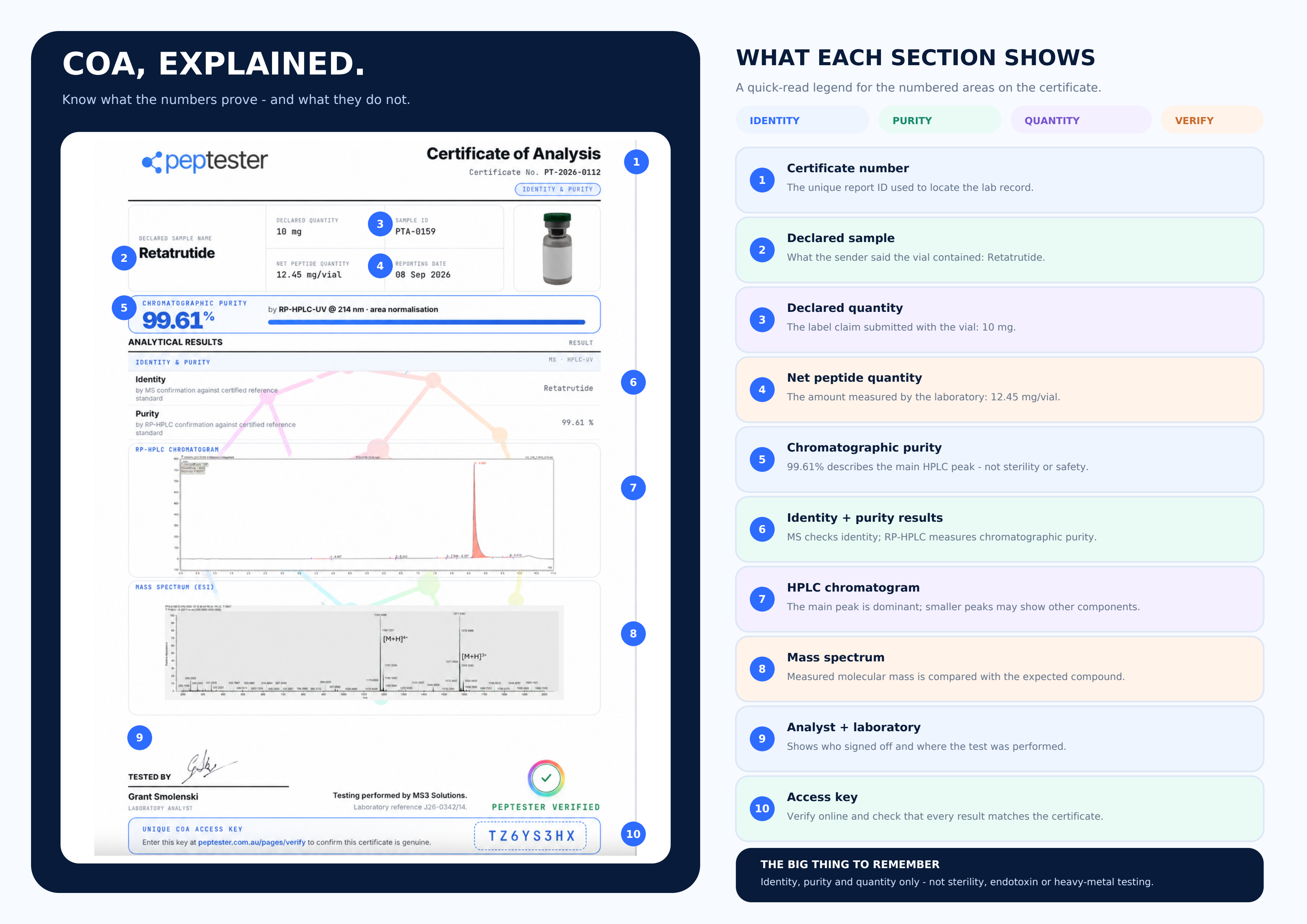
Peptide COA guide: why testing matters
Independent testing helps you understand what was in the sample a lab received. A genuine Certificate of Analysis can confirm identity, measure purity and report quantity. Depending on the panel, it may also screen for heavy metals, endotoxins or sterility. Research-use notes only. This site is not medical advice, not a clinic, and not an offer to sell compounds for human use.
How to read the main fields
- Compound / identity — does the report name the peptide you think you bought?
- Batch or lot — can you match it to the vial or product page?
- Date — is the report recent enough for the stock you are looking at?
- Laboratory — is a lab named, and can you verify the report if a public lookup exists?
- Purity / quantity — read the numbers next to the method (e.g. HPLC), not a homepage banner.
Batch evidence vs marketing purity
A COA speaks to the sample submitted for that batch or report — not to every future vial, and not to a slogan on a product card. “99% purity” without a matching file, named lab and date is marketing. Prefer shops that publish reports you can open before checkout.
What a COA cannot prove
- That every vial in a later shipment matches the tested sample
- Sterility, safety or medical suitability if those tests are not on the certificate
- That the shop is a clinic, pharmacy or licensed medicine supplier
- Anything beyond the methods and analytes listed on that report
Honest interpretation still makes testing worth doing: it creates accountability and helps spot mislabelled, underfilled or wrong-identity products.